Description
Description
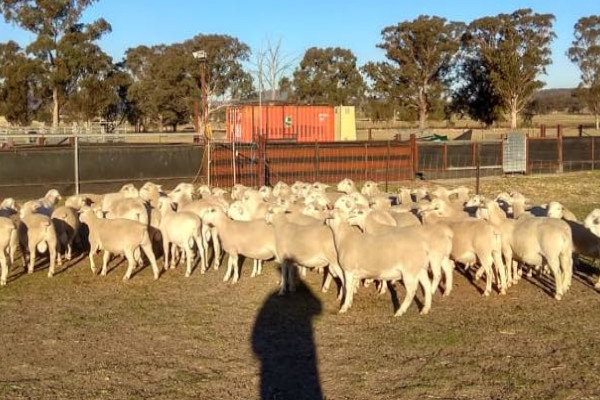
Mutton Merino Sheep
There are three German Merino breeds: Merinolandschaf (Merino landsheep), Merinofleischschaf (Merino mutton sheep), and Merinolangwollschaf (Merino longwool sheep).
Although all three breeds produce Merino wool and are similar in meat yield, they went through a different historical genealogical development. About 40% of the German sheep are of the Merinolandschaf breed.
The Merinofleischschaf is at home east of the Elbe river, spreading all the way to the Ural Mountains. It is highly resistant, and easily adapts to any climate and keeping conditions. It grows easily with good meat yield. Non-seasonal breeding cycle (3 breedings in 2 years), high fecundity, and good mothering instincts make the Merinofleischschaf a good choice for intense milk-lamb production.
Mutton Merino Sheep
Goats
The wool staple is tighter and more closed than on the Merinolandschaf. The fine white wool is of Merino character, with an evenly distributed fiber diameter of 24-30 microns. Rams produce 7-10 kg of wool; the fleece of a ewe weighs 4-5 kg.
The medium-sized frame is broad and deep with well developed meat shapes. Head is medium broad with the typical wool tuft on top. Ears are sturdy and stand out to the side. Body and chest are deep and broad, with a long and muscular back. A long and broad pelvis and deep, full thighs are typical for this breed. Mutton Merino Sheep for sale
The goat, along with sheep, were among the earliest domesticated animals. Goat remains have been found at archaeological sites in western Asia, such as Jericho, Choga, Mami, Djeitun and Cayonu, which allows domestication of the goats to be dated at between 6000 and 7000 B.C.
However, unlike sheep, their ancestry is fairly clear.
Goats easily revert to feral or wild condition given a chance. In fact, the only domestic species that will return to a wild state as rapidly as a goat is the domestic cat.
Reviews
There are no reviews yet.
Related products
- Add to WishlistAdd to Wishlist
- Add to WishlistAdd to Wishlist
- Add to WishlistAdd to Wishlist
- Add to WishlistAdd to Wishlist